Author: Dr. Ross Headifen (PhD)
Ross Headifen has a PhD in Mechanical Engineering and over 28 years of experience developing environmental and sustainable industry solutions. As co-founder of landfill biodegradable plastics brand Biogone and environmental equipment supplier FieldTech Solutions, Ross works closely with the food service sector—highlighting the importance of choosing plastics with a better end-of-life, particularly when most packaging ultimately ends up in landfill rather than being recycled. Biogone makes everyday plastic products with built-in landfill biodegradable technology.
If you’ve ever stood at the bin holding a plastic container and squinted at the little triangle on the bottom, you’re not alone. Most Australians know the recycling symbols exist. Far fewer know what each number actually means — or, more importantly, which bin the item belongs in once you live in this particular suburb of this particular city in this particular state.
This article does two things. First, it explains the seven plastic resin codes and what they identify. Second — and this is the bit that matters most for Australians — it walks through how the Australasian Recycling Label (ARL) sits on top of those codes, why the resin number alone doesn’t tell you whether something is recyclable here, and what to do with the items that aren’t.
The quick answer
The recycling symbol with a number from 1 to 7 in the middle is a resin identification code. It tells you the type of plastic the item is made from. It does not tell you whether your local kerbside service will accept it.
In Australia, the label you actually want to look for is the Australasian Recycling Label (ARL). The ARL is a separate, evidence-based on-pack label that tells you specifically what to do with each part of the packaging — recycle it, put it in general waste, or take it somewhere else like a soft plastics drop-off point. The ARL is built on top of the resin codes but answers the more useful question: where does this thing actually go?
The Australasian Recycling Label (ARL): the symbol that actually matters in Australia
The ARL is run by the Australian Packaging Covenant Organisation (APCO) in partnership with Planet Ark and PREP Design. It launched in 2018 and now appears on packaging from hundreds of brands across Australia and New Zealand.
It uses three classifications:
- Recyclable — a solid (opaque) recycling symbol means this part of the packaging can go in your kerbside recycling bin.
- Conditionally Recyclable — a transparent recycling symbol means it can be recycled, but only if you follow the on-pack instructions (for example, “Check Locally”, “Return to Store”, or “Rinse First”).
- Not Recyclable — a bin symbol means it belongs in your general waste bin.
The ARL is component-specific. A single product can carry several labels — one for the bottle (recyclable), one for the cap (not recyclable), one for the sleeve (return to store). Look at all of them, not just the most prominent one.
The seven plastic resin codes — and where they actually go in Australia
Resin codes haven’t changed since 1988. What has changed is what each plastic is used for, how it’s processed, and whether kerbside services accept it. The table below summarises each code and the typical Australian disposal pathway.
| Code | Plastic | Common uses | Typical AU kerbside |
|---|---|---|---|
| 1 — PET | Polyethylene terephthalate | Water and soft-drink bottles, salad punnets, peanut butter jars | Yes — empty, lid on or off per council |
| 2 — HDPE | High-density polyethylene | Milk bottles, shampoo bottles, ice cream tubs | Yes — rigid HDPE accepted everywhere |
| 3 — PVC | Polyvinyl chloride | Pipes, some cling wraps, blister packs, garden hose | No — general waste |
| 4 — LDPE | Low-density polyethylene | Plastic shopping bags, bread bags, squeeze bottles, cling wrap | Rigid LDPE only. Soft LDPE needs drop-off recycling |
| 5 — PP | Polypropylene | Yoghurt tubs, takeaway containers, ice cream lids, straws | Yes — most councils accept rigid PP |
| 6 — PS | Polystyrene | Foam cups, meat trays, take-away containers, packing peanuts | No — general waste in most councils |
| 7 — Other | Everything else (incl. bioplastics, PLA, nylon, multi-layer) | Sunglasses, CDs, baby bottles, some compostable plastics | No — check the ARL on the packaging |
Soft plastics: the category that confuses everyone
A plastic that scrunches into a ball — a bread bag, a chip packet, a frozen-veg bag, the wrap around a six-pack of yoghurts — is a soft plastic. Soft plastics cannot go in your kerbside recycling bin even if they carry a resin code that, in rigid form, would be recyclable. The processing machinery treats them as contamination because they wrap around the sorting equipment.
Between 2011 and late 2022, REDcycle drop-off points at major supermarkets accepted soft plastics. REDcycle collapsed in November 2022. A staged replacement scheme is being trialled at selected Coles and Woolworths stores under the Soft Plastics Taskforce, but the rollout is incomplete. For most Australians right now, the practical answer for soft plastics is: check what your nearest Coles or Woolworths currently accepts, and otherwise, those soft plastics go in general waste.
This is part of the reason landfill-biodegradable plastic exists as a category. If a soft plastic is destined for landfill anyway because it can’t practically be recycled, the next-best question is whether it breaks down once it gets there — rather than persisting for hundreds of years as conventional plastic does.
Why kerbside acceptance varies by state and council
Australia doesn’t have a single national kerbside recycling system. Each local council contracts its own waste collection and processing, and what those processors can handle differs. A plastic accepted in inner-Melbourne may not be accepted in regional NSW. A PP yoghurt tub recycled in your council may be sent to landfill in the next council over.
Two practical implications:
- The ARL’s “Check Locally” message is genuine — it really does depend on where you live. The Recycle Mate app (free, run by APCO) checks your specific council’s rules.
- National generalisations are best avoided. “Australia recycles X% of plastic” means very little once you’re holding one specific item in one specific kitchen.
What the recycling symbol doesn’t tell you: biodegradable, compostable, and landfill-biodegradable
The recycling triangle answers one question: what type of plastic is this? It doesn’t answer the other questions you might care about, such as whether the plastic breaks down, how long it takes, and under what conditions.
Three terms get used interchangeably and shouldn’t be:
- Recyclable — can be reprocessed into new material if collected and sorted correctly.
- Compostable — breaks down into organic matter in a composting environment. Industrial-compostable requires high-temperature commercial facilities; home-compostable can break down in a backyard compost bin. Compostable plastics generally should not go in the kerbside recycling bin.
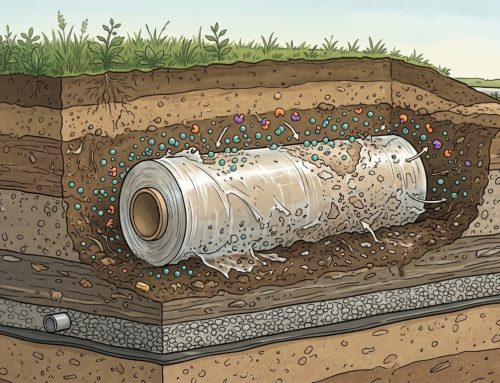
- Landfill-biodegradable — designed to break down in the anaerobic, microbial conditions of a landfill. Biogone’s products use this approach: the plastic remains structurally normal during use, but once it’s in landfill, microbes break it down into biogas and humus rather than persistent fragments.
It’s worth flagging what these terms are not. “Degradable” and “oxo-degradable” plastics fragment into microplastics rather than breaking down — the ACCC has acted against misleading claims in this category, and Australia’s 2025 National Plastics Plan targets phasing them out. Any product marketed as “degradable” without specifying the environment and timeframe should be treated with caution.
A practical checklist for the bin
- Look for the ARL first. If the packaging has an ARL, follow it. It’s built for your bin, not a generic recycling system.
- If there’s only a resin code (1–7), use this rule of thumb: rigid 1, 2 and 5 go in kerbside recycling almost everywhere. 3, 6 and 7 generally don’t. 4 depends on whether it’s rigid or soft.
- Squashes into a ball? It’s a soft plastic. That means general waste unless your nearest Coles or Woolworths has an active drop-off bin.
- Empty and clean. Food residue contaminates whole loads of recyclables. A quick rinse keeps your effort actually useful.
- When in doubt, check with your council. This can be done through the Recycle Mate app or your council website.
Where landfill-biodegradable plastic fits
Most of Biogone’s products carry recycling code 2 (HDPE) or 4 (LDPE). They perform identically to conventional HDPE and LDPE during use — same strength, same leak-resistance and same shelf life. The difference is what happens at end-of-life: when they reach landfill, a built-in landfill biodegradable technology activates microbial breakdown. An organic supplement in the plastic attracts naturally occurring microbes in the landfill rather than letting the plastic persist as inert material.
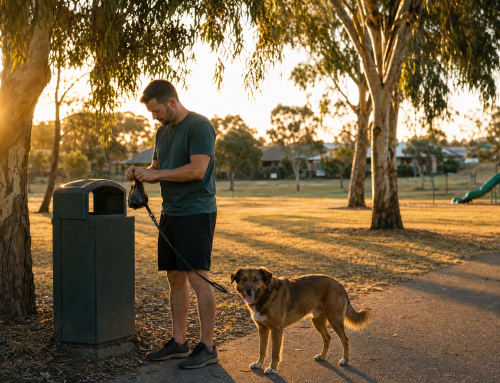
This is the practical answer for the categories where recycling isn’t realistic: dog poop bags (always contaminated with organic waste, never recyclable), bin liners (mostly soft plastic, mostly headed to landfill), and warehouse soft plastics like pallet wrap that fall outside kerbside systems. If the destination is landfill, the question becomes how the plastic behaves once it’s there.
FAQs
About Biogone
Biogone is an Australian manufacturer of landfill-biodegradable plastic products — dog poop bags, bin liners, mailing satchels, cling wrap, gloves, and packaging supplies for businesses. Our plastics carry standard resin codes and recycle in the same waste streams as conventional plastic, with the added benefit that when they end up in landfill, they break down.