
Author: Dr. Ross Headifen (PhD)
Ross Headifen has a PhD in Mechanical Engineering and over 28 years of experience developing environmental and sustainable industry solutions. As co-founder of landfill biodegradable plastics brand Biogone and environmental equipment supplier FieldTech Solutions, Ross works closely with the food service sector—highlighting the importance of choosing plastics with a better end-of-life, particularly when most packaging ultimately ends up in landfill rather than being recycled. Biogone makes everyday plastic products with built-in landfill biodegradable technology.
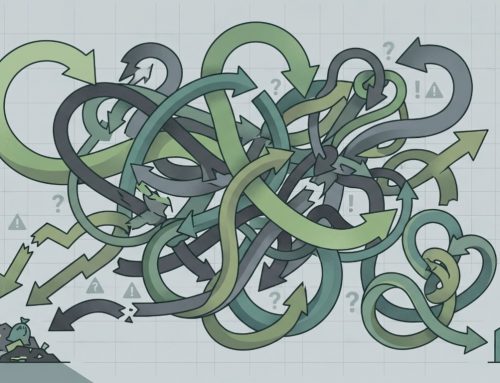
If you’ve ever stood in a supermarket aisle staring at two near-identical packets — one labelled “biodegradable”, the other “compostable” — and wondered which one is actually better, you’re not alone. The labels feel like they should mean the same thing. They don’t. And the difference matters more than the marketing makes obvious.
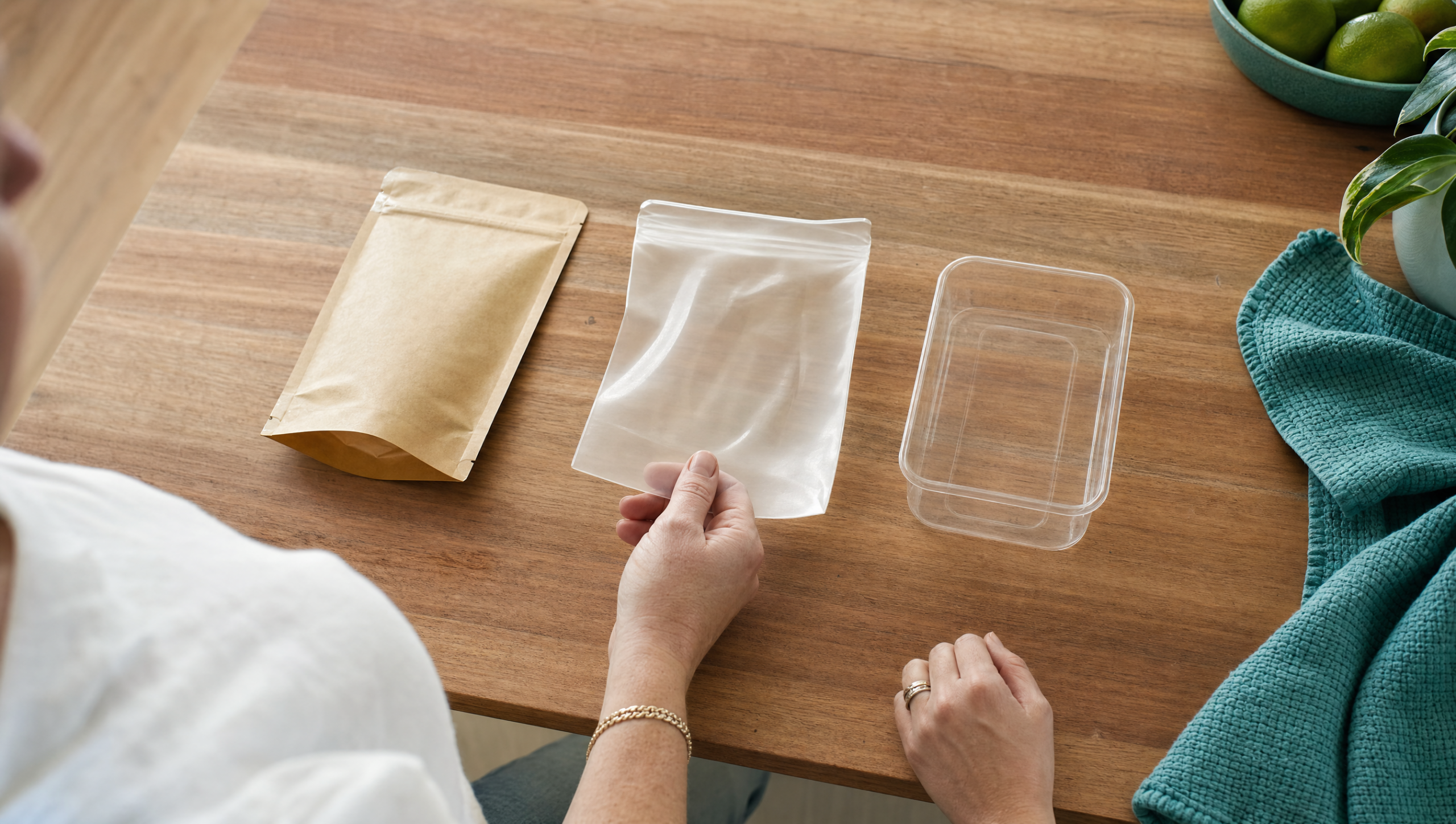
This guide walks through what each of these three terms — compostable, biodegradable, and recyclable — means in an Australian context, why the distinctions matter, and where landfill-biodegradable plastic sits in the picture. No jargon, no greenwashing, just a clear decision framework.
The short version
- Recyclable means the material can be reprocessed into new material — but only if it’s collected, sorted, and accepted by a facility that can handle it.
- Compostable means the material breaks down into organic matter in a composting environment — but “a composting environment” covers everything from a backyard bin to a commercial facility, and the rules are different for each.
- Biodegradable means the material breaks down through biological processes — but the word alone doesn’t tell you where, how long, or into what.
Each of these is a different end-of-life pathway. They’re not interchangeable, and a product that fits one isn’t automatically suited to another. The trick is matching the product to the bin and pathway that actually exists where you live.
Recyclable: what the word actually promises
Recyclable plastic is plastic that can be collected, cleaned, processed, and remade into new plastic items. The classic examples are PET water bottles (resin code 1), HDPE milk bottles (code 2), and PP yoghurt tubs (code 5). These are rigid plastics that Australian kerbside recycling systems are designed to handle.
The catch is that “recyclable” is a description of capability, not a guarantee of outcome. A plastic can be technically recyclable and still end up in landfill — because the local processor doesn’t accept it, because there’s no end market for that grade, because it was contaminated with food waste, or because it was too small to be sorted. Soft plastics (the kind that scrunch into a ball) are the most obvious example: they’re technically recyclable but most Australians have nowhere to actually recycle them since REDcycle collapsed in late 2022.
In Australia, the most reliable signal of actual recyclability isn’t the resin code triangle — it’s the Australasian Recycling Label (ARL) that appears on a growing share of packaging. The ARL tells you whether each part of the packaging belongs in kerbside recycling, in general waste, or somewhere else like a store drop-off.
Compostable: a stricter promise, with two flavours
Compostable is a more rigorously defined term than biodegradable, at least in Australia. To carry an Australian compostable certification, a product has to pass standardised testing on breakdown rate, residue toxicity, and effect on plant growth.
There are two recognised Australian standards:
- AS 4736-2006 covers industrial (commercial) compostable plastic. It requires breakdown under controlled high-temperature conditions (around 60°C) in a commercial composting facility. Products certified to this standard carry the Australasian Bioplastics Association’s seedling logo.
- AS 5810-2010 covers home compostable plastic. It requires breakdown at much lower temperatures in a typical backyard compost bin. Products certified to this standard carry a home-compostable seedling logo with “HOME” underneath.
This is the bit most people get wrong: industrially compostable plastic is not designed to break down in a backyard compost bin, and it will not break down meaningfully in a kerbside FOGO (food organics, garden organics) bin in many councils because the processing conditions are different to the AS 4736 test conditions. Putting industrially compostable plastic into a backyard compost just leaves you with a near-intact bag a year later, surrounded by mature compost.
And if compostable plastic ends up in landfill — which it often does, because Australia has a limited network of commercial composting facilities and almost no separate collection for compostable packaging — it does not break down in the way the certification suggests, because the anaerobic conditions of a landfill are not the conditions the product was designed for.
Industrial vs home matters. The ACCC has been clear in its environmental claims guidance (finalised December, 2023) that businesses must specify the conditions a product needs to break down — vague claims like “compostable” without saying which type are a flagged greenwashing risk.
Biodegradable: the term that means everything and nothing
“Biodegradable” is technically a true statement about almost any organic material — give it enough time and the right microbes, and it’ll break down. That’s exactly the problem. Without specifying the environment and the timeframe, the word is close to meaningless.
The ACCC made this point explicit in March 2023, when it published the results of an internet sweep of environmental claims. It found that roughly 57% of the businesses it reviewed were making claims that may have been misleading. Vague terms like “biodegradable”, “eco-friendly”, and “sustainable” — used without specifying what they actually mean for the product — are the textbook example of the kind of claim the regulator flagged.
A useful test when you see “biodegradable” on a label: does the packaging say where it breaks down and how long it takes? If not, treat the claim cautiously. If yes, then the claim is at least specific enough to evaluate.
Two terms that look biodegradable but aren’t
Watch for two specific terms that frequently appear on packaging and shouldn’t be confused with biodegradable:
- Degradable — just means that the plastic falls apart. It doesn’t necessarily mean anything biological is happening. Many “degradable” plastics fragment into microplastics that persist for centuries.
- Oxo-degradable — refers to plastic with a metal-salt additive that accelerates fragmentation when exposed to oxygen and sunlight. Oxo-degradable plastic is widely criticised because it produces microplastics rather than genuinely breaking down. Australia’s 2025 National Plastics Plan aims to phase out problematic plastics, and oxo-degradable plastic is in that category.
Landfill-biodegradable: the category that exists because reality bites
Here’s the inconvenient truth that drives the existence of landfill-biodegradable plastic: most Australian plastic packaging ends up in landfill. Not in recycling. Not in compost. Landfill. Even with kerbside recycling running, even with FOGO bins being rolled out across councils, the practical destination for a great deal of plastic — especially soft plastic and contaminated plastic — is the tip.
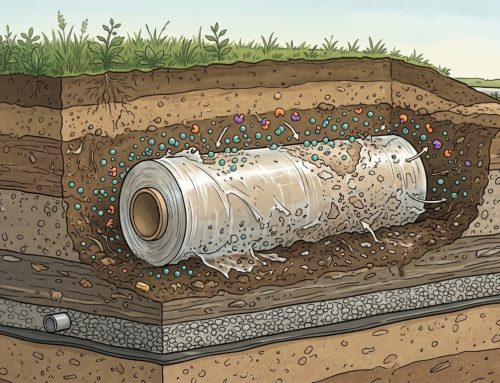
Landfill-biodegradable plastic is designed for that reality. It performs identically to conventional plastic during use — same strength, same flexibility, same shelf life, same recycling stream if you do recycle it. The difference is what happens once it’s in landfill. A built-in landfill biodegradable technology — an organic supplement built into the plastic — attracts the microbes that exist in landfill’s wet, oxygen-poor environment. Those microbes break the plastic down into biogas (which modern landfills capture and use for energy) and humus (the dark organic residue that enriches soil).
Conventional plastic in landfill can persist for hundreds of years. Landfill-biodegradable plastic breaks down over a few years. It is not a magic fix — recycling is still the better option when it actually works — but for the categories where recycling realistically doesn’t happen (dog poop bags, contaminated bin liners, single-use mailers), it’s a meaningful improvement on the alternative.
This is the category Biogone manufactures in. All Biogone products are landfill-biodegradable. Most carry standard resin codes (typically 2 or 4) and remain compatible with conventional plastic recycling, so the choice is structurally lower-impact than “regular” plastic without forcing a sacrifice in product performance.
At a glance: how the four categories compare
| Category | Where it breaks down / processes | Typical AU disposal | Risk of going wrong |
| Recyclable | Re-manufactured into new plastic at a recycling facility | Kerbside recycling bin (rigid only), store drop-off for soft plastic | Won’t be recycled if contaminated, soft-form, or in a non-accepting council |
| Industrial compostable (AS 4736) | Commercial compost facility, ~60°C, high moisture | FOGO bin only if council confirms acceptance; otherwise general waste | Doesn’t break down in landfill or backyard compost |
| Home compostable (AS 5810) | Backyard compost bin, ambient temperature | Backyard compost or FOGO; general waste as fallback | Slower than industrial compostable; doesn’t break down in landfill |
| Landfill-biodegradable | Anaerobic microbial breakdown in landfill | General waste (and recyclable in compatible streams) | None — works in its design destination |
| Degradable / oxo-degradable | Fragments into microplastics | Not recommended — fragments persist in environment | Greenwashing risk; phasing out under 2025 plan |
How to decide which category to buy
There isn’t a single right answer — the best choice depends on the product and on what waste streams you have access to. A practical decision framework:
- If the product will realistically be recycled — buy recyclable. Rigid bottles, jars, and containers from items that empty cleanly and go straight to the recycling bin. This is the best outcome where it’s achievable.
- If you have a working backyard compost — buy home compostable for organic waste packaging. Caddy liners for food scraps, certified to AS 5810, work well alongside the compost itself.
- If your council has FOGO collection that accepts certified compostable packaging — industrial compostable is appropriate. Confirm with your council, because not all FOGO services accept it.
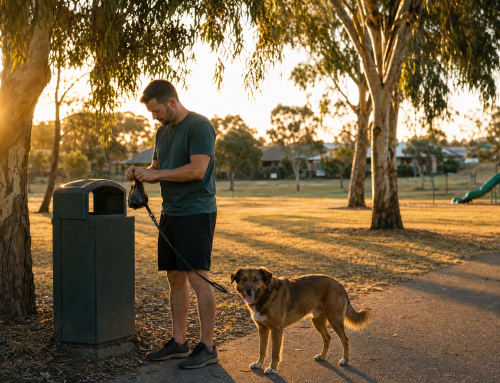
- If the product is heading for general waste regardless (dog poop bags, contaminated bin liners, soft plastic packaging) — buy landfill-biodegradable. This is the segment where the conventional/biodegradable choice makes the most practical difference.
- If a product is labelled only “biodegradable”, “eco-friendly”, or “degradable” without specifics — ask for specifics. The label should tell you the environment, the standard, and the timeframe. If it doesn’t, the claim might not survive scrutiny under ACCC rules.
Frequently asked questions
What does compostable mean?
Compostable means the material is designed to break down into organic matter in a composting environment within a defined timeframe and to defined standards. In Australia, certified compostable products meet either AS 4736-2006 (industrial composting, requires commercial facility) or AS 5810-2010 (home composting, breaks down in a backyard bin). Certified products carry the Australasian Bioplastics Association seedling logo.
What is the meaning of biodegradable?
Biodegradable means a material can be broken down by biological processes — microbes, fungi, or other living organisms — into simpler natural substances. The word alone doesn’t specify where the breakdown happens, how long it takes, or what it breaks down into. To be useful, a biodegradable claim should specify the environment (compost, landfill, marine etc.) and the timeframe.
Is compostable better than biodegradable?
It depends on what happens to the product after you throw it out. Certified compostable plastic is more rigorously defined and tested than generic “biodegradable” plastic — but it only delivers its environmental benefit if it actually reaches a composting facility (industrial) or compost bin (home). If compostable plastic ends up in landfill, it doesn’t break down the way it would in compost. Landfill-biodegradable plastic is designed to break down in landfill conditions specifically.
Can I put compostable plastic in my recycling bin?
No. Compostable plastic is not designed to be recycled and can contaminate a load of conventional plastic recyclables. Industrial compostable plastic goes to FOGO collection (if your council accepts it) or commercial composting. Home compostable plastic goes to your backyard compost or FOGO; otherwise it goes to general waste.
What is the difference between compostable and landfill-biodegradable?
Compostable plastic is designed to break down in composting conditions (high-temperature commercial facilities for AS 4736, or backyard bins for AS 5810). Landfill-biodegradable plastic is designed to break down in landfill conditions — low oxygen, microbial-rich. The two products solve different problems: compostable diverts waste from landfill, while landfill-biodegradable improves what happens to waste that ends up in landfill anyway.
Are degradable and biodegradable the same thing?
No. Degradable just means the material breaks down or falls apart — typically into smaller fragments — without specifying any biological process. Many degradable plastics fragment into microplastics that persist in the environment for a very long time. Biodegradable refers to breakdown by biological processes into natural substances, which is fundamentally different.
About Biogone
Biogone is an Australian manufacturer of landfill-biodegradable plastic products — dog poop bags, bin liners, mailing satchels, cling wrap, gloves, and packaging supplies for businesses. Our plastics carry standard resin codes and recycle in the same waste streams as conventional plastic, with the added benefit that when they end up in landfill, they break down rather than persist for centuries.