Author: Dr. Ross Headifen (PhD)
Ross Headifen has a PhD in Mechanical Engineering and over 28 years of experience developing environmental and sustainable industry solutions. As co-founder of landfill biodegradable plastics brand Biogone and environmental equipment supplier FieldTech Solutions, Ross works closely with the food service sector—highlighting the importance of choosing plastics with a better end-of-life, particularly when most packaging ultimately ends up in landfill rather than being recycled. Biogone makes everyday plastic products with built-in landfill biodegradable technology.
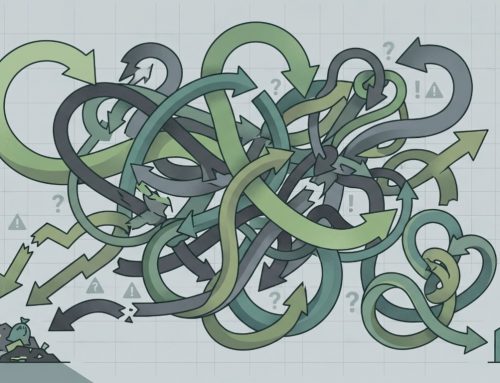
If you’re running a small ecommerce business in Australia, sustainable packaging is somewhere on your to-do list and somewhere on your customers’ wishlist. The problem is that the moment you start searching, you’re hit with a wall of competing claims — biodegradable, compostable, eco-friendly, sustainable, recycled, recyclable, plant-based, plastic-free — that all sound similar but mean different things. Some of them mean very little at all.
This guide is for the person packing orders. It walks through how to evaluate sustainable packaging options for an Australian ecommerce operation — what to ask suppliers, which claims survive scrutiny, what kind of packaging fits which kind of product, and how to communicate your choices to customers without overstepping what you can actually defend. No jargon, no marketing fluff, just a practical procurement framework.
Why this is harder than it should be
Three things make sustainable packaging procurement difficult for small Australian brands:
- Claims are mostly unstandardised. “Biodegradable” can mean a properly certified product or a vague marketing claim with no testing behind it. “Eco-friendly” means whatever the supplier wants it to mean. The Australian Competition and Consumer Commission’s March 2023 internet sweep found roughly 57% of businesses reviewed were making environmental claims that may have been misleading. The regulator is paying attention to this space.
- What sounds sustainable often isn’t in practice. Compostable packaging that ends up in landfill (which most does, in Australia) doesn’t deliver its certified benefit. Plant-based packaging that gets shipped from overseas in petroleum-fuelled containers may have a worse footprint than a thoughtfully-chosen local alternative.
- Customers can tell when you’re overclaiming. Sustainability messaging that doesn’t hold up to a thirty-second Google search will damage trust faster than no messaging at all. The goal is genuine, modest, accurate — not maximum eco-points.
Start with what you actually ship
Sustainable packaging isn’t a single decision — it’s a series of decisions, one for each item in your packing process. Most small Australian ecommerce orders involve some combination of:
- An outer mailer or satchel (for soft goods) or a cardboard mailer/box (for fragile or rigid goods)
- Inner protection — tissue paper, bubble wrap, void fill, or packing paper
- Tape to seal the package
- Shipping label (sometimes integrated, sometimes a separate adhesive)
- Optional extras — care cards, dust bags, ribbon, branded stickers
Each of these has different sustainability options, and the right choice depends on what you’re shipping. Clothing in a 60-micron satchel needs different protection to fragile ceramics in a corrugated box. The trick is matching the packaging to the product first, then choosing the most sustainable version of that packaging — not picking the greenest material and forcing it to fit.
The outer layer: choosing a mailer or satchel
For most ecommerce orders, the mailer is your biggest packaging decision — both in volume of material and in customer visibility. The four main options are:
Conventional plastic satchels
Cheapest, lightest, most durable. Made from low-density polyethylene (LDPE, resin code 4). Theoretically recyclable through soft-plastic streams, but with REDcycle’s collapse in late 2022 and a patchy replacement rollout, most go to landfill in practice. Sit there for centuries.
Landfill-biodegradable satchels
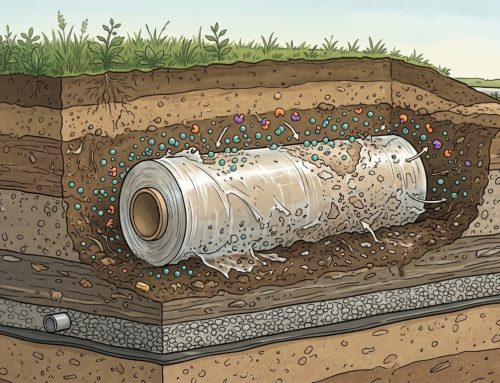
Same base material as conventional plastic (LDPE in most cases) but with a built-in landfill biodegradable technology — an organic supplement that triggers microbial breakdown once the satchel reaches landfill. Performs identically to conventional plastic during use — same strength, same shelf life, same recyclability through soft-plastic streams. The difference is what happens at end-of-life: taking years to decades to break down instead of centuries. Biogone’s landfill-biodegradable satchels are 60 micron, available in three sizes (1kg, 3kg, 5kg) with self-adhesive seals.
Home compostable satchels (AS 5810)
Plant-based polymers that break down in a backyard compost bin. Good fit if your customer base is composting-active and aware. Trade-offs: shorter shelf life (typically 12 months from the date of manufacture, so order in modest quantities), can degrade in storage if stored poorly, and the customer needs to know to compost it — otherwise it ends up in landfill where it breaks down more slowly than the certification suggests.
Cardboard / paper mailers
Recyclable through kerbside paper recycling, which has the highest functional recovery rate of any packaging material in Australia. Heavier than plastic satchels, which means higher shipping costs and more weight in transit. Less protective against moisture. Good for rigid or moisture-tolerant items; not ideal for clothing that might get rained on at the doorstep.
How to compare on a like-for-like basis
Each option has trade-offs. The table below is a starting point for comparison — your specific use case will adjust the weighting.
| Option | Cost per unit | Strength | Recyclable in AU | End-of-life if landfilled |
|---|---|---|---|---|
| Conventional plastic satchel | $ | Excellent | Soft plastic (patchy) | Persists 100+ years |
| Landfill-biodegradable satchel | $$ | Excellent | Soft plastic (where available) | Years to decades |
| Home compostable satchel | $$$ | Good (degrades if stored) | Not recyclable | Months to years (incomplete) |
| Cardboard / paper mailer | $$ | Lower (no moisture protection) | Kerbside paper (yes) | Years (decomposes) |
Two things to factor in beyond the table. First, what your customers actually do with the packaging matters more than what the packaging is theoretically capable of. If most of your customers won’t home-compost a satchel, the home compostable option may not be delivering the benefit you’re paying for. Second, what gets damaged in transit costs you money in replacements, returns, and refunds — and creates more waste than the packaging itself. Under spec’ing on protection to save sustainability cost can backfire.
Eight questions to ask a packaging supplier
If you’re evaluating a supplier’s sustainability claims, these eight questions cut through the marketing language quickly. A supplier who can answer them clearly is one you can probably trust; a supplier who deflects is one you probably can’t.
- What is the product made of? A specific answer (“LDPE with a 2% organic supplement” or “PBAT and corn starch blend”) is good. A vague answer (“eco-friendly materials”) is a flag.
- What standard or certification does the product meet? Acceptable answers in Australia include AS 4736 (industrial compostable), AS 5810 (home compostable), or independent testing under ASTM D5511 (anaerobic biodegradation). “Eco-certified” without a named standard is meaningless.
- Where does the product break down, and over what timeframe? Compostable plastic needs composting conditions; landfill-biodegradable plastic needs landfill conditions. A supplier who can’t specify the environment is selling you a vague claim.
- What happens to the product if my customer puts it in general waste? This is the realistic question. “Designed for industrial composting” + “no separate collection in your area” = ends up in landfill, where it doesn’t deliver the certification’s benefit.
- Does it contain oxo-degradable additives? These should be a hard no. They fragment into microplastics and are being phased out under Australia’s 2025 National Plastics Plan. A supplier who can’t confirm absence of oxo-degradable additives shouldn’t be on your shortlist.
- What’s the shelf life? Conventional and landfill-biodegradable plastic have no practical shelf life. Compostable plastic typically has 12–18 months from manufacture. Order quantities should match shelf life — bulk-buying compostable mailers you won’t use within a year wastes money.
- Is it manufactured in Australia? Locally manufactured packaging has lower shipping emissions and supports an Australian supply chain. It’s not the only factor but it’s a real one — especially if the alternative is something flown in from overseas with a higher footprint than the marketing implies.
- Can I see the test results or certification documentation? A legitimate supplier will share test reports, certification numbers, and lab references. “Trust us” is not an answer.
Don’t forget the tape, void fill, and labels
Most ecommerce brands choose a sustainable outer satchel or box and then seal it with a roll of standard polypropylene tape, fill it with conventional bubble wrap, and slap on a sticker-backed shipping label. All of which puts conventional plastic right back into the package.
Tape
Standard plastic packing tape is one of the worst contamination sources for cardboard recycling because it’s difficult to separate at recycling facilities. Options include paper-based gummed tape (water-activated kraft tape), which is fully recyclable with the cardboard; or landfill-biodegradable packing tape, which performs the same as conventional tape but breaks down in landfill conditions. Either is a better choice than standard plastic tape for any business that uses tape in volume.
Void fill and protection
Bubble wrap is the default and the worst sustainable choice — soft plastic, almost always landfilled. Alternatives include corrugated cardboard inserts (recyclable), shredded recycled paper (free if you have an office shredder), starch-based packing peanuts (compostable), and landfill-biodegradable bubble wrap (same protection as conventional, breaks down in landfill). For most small ecommerce operations, shifting to landfill-biodegradable bubble wrap is a like-for-like swap with no operational change.
Shipping labels
Standard adhesive shipping labels are plastic-backed and not easily recyclable. If you’re shipping through Australia Post or major couriers, you’re likely locked into their label format. But you can choose where to place the label — directly on a paper mailer keeps the whole package recyclable through kerbside paper; on a plastic satchel keeps everything in the same disposal stream.
How to talk about your packaging without overstepping
Once you’ve chosen sustainable packaging, you’ll want to tell customers about it. This is where small brands most often get into trouble — the ACCC’s December 2023 environmental claims guidance is clear that vague, exaggerated, or unsubstantiated claims are a compliance risk. The eight principles in the guidance can be summarised as: be accurate, be specific, don’t overstate, and substantiate everything.
Some practical wording examples:
- Avoid: “Our packaging is 100% eco-friendly and biodegradable.”
- Better: “Our mailing satchel is landfill-biodegradable. Once disposed of in general waste, it breaks down in years rather than the centuries conventional plastic takes.”
- Avoid: “Compostable packaging — break it down at home.”
- Better: “Our satchel is certified home compostable to AS 5810. Put it in your home compost bin or your kerbside FOGO collection if your council accepts it. Otherwise it can go in general waste.”
- Avoid: “Made from sustainable materials.”
- Better: “Made using LDPE with an organic supplement for landfill biodegradation, plus 30% post-consumer recycled content.”
The pattern is the same in each case: specific over vague, accurate over flattering, and grounded in what the product actually does. Customers are more sophisticated than generic eco-marketing assumes — they appreciate honesty about trade-offs.
A simple procurement framework
Putting it all together, here’s a five-step framework for evaluating sustainable packaging options:
- Start with the product. What needs to be protected? What can the packaging realistically be made of without compromising the product? A fragile ceramic needs different packaging to a t-shirt.
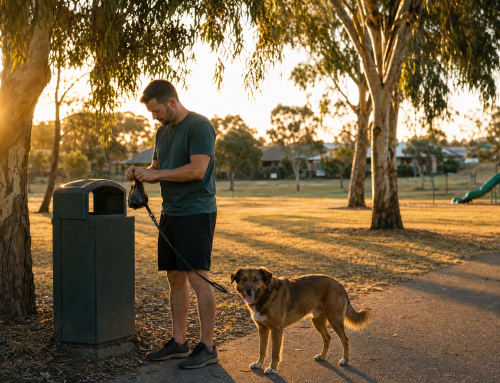
- Consider the realistic disposal pathway. What will your typical customer actually do with the packaging? If most will throw it in general waste, choose something designed for that destination (landfill-biodegradable). If most will recycle paper, paper-based makes sense. Match the packaging to behaviour, not to ideals.
- Ask the eight supplier questions. Eliminate options that can’t answer them clearly.
- Test before bulk-buying. Order a small quantity, pack a few orders, and check that the packaging works in your operation. Sustainable packaging that tears, doesn’t seal cleanly, or doesn’t protect goods will cost more than it saves.
- Tell customers honestly. Be specific about what you’ve chosen and why. The most credible sustainability messaging acknowledges trade-offs rather than claiming perfection.
FAQs
About Biogone
Biogone is an Australian manufacturer of landfill-biodegradable and home compostable packaging for ecommerce and small business — mailing satchels in three sizes, padded mailers, packing tape, bubble wrap, stretch wrap, and gloves. We supply small ecommerce brands directly with bulk pricing, custom branding, and volume-based rates. If you’re evaluating sustainable packaging for your business, get in touch — we’d rather talk through the right product for your situation than push the wrong one.