
Author: Dr. Ross Headifen (PhD)
Ross Headifen has a PhD in Mechanical Engineering and over 28 years of experience developing environmental and sustainable industry solutions. As co-founder of landfill biodegradable plastics brand Biogone and environmental equipment supplier FieldTech Solutions, Ross works closely with the food service sector—highlighting the importance of choosing plastics with a better end-of-life, particularly when most packaging ultimately ends up in landfill rather than being recycled.
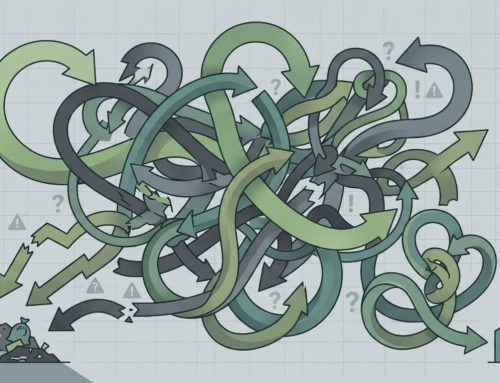
The circular economy is the buzz phase of the past few years since the Chinese sword fall in 2018. All of a sudden, we had nowhere to ‘recycle’ our plastic waste. What almost everyone did not understand was the sending our plastic waste offshore was doing very little to drive recycling in Australia. With the sudden stop and no alternate plans to deal with it, Australia was left in a lurch. The circular economy concept was quickly rolled out to make us feel better. Plans were rolled out with targets to reach certain recycling amounts and to do away with excess packaging and unnecessary plastic.
Now as we approach some of these target goals, reality is starting to set in. We are not going to meet them and not just by little amount. We are going to miss them by hundreds of percent. It is going to take much longer than the optimistic plans that have been developed the last few years. To make effective change needs
- industry to change their product designs, product materials, and be involved in extended producer responsibility programs.
- government to bring regulatory pressure to push the sustainability of the economy in a different direction. To incentivise industry to make the above changes. Bring in a virgin materials tax.
- consumers to change their lifestyle, consumption habits and pay a lot more attention to what they do with their waste.
- to build in a large amount of infrastructure to collect ‘waste’ and bring it back to processing facilities.
All this has to be achieved without making recycled material more costly than virgin materials, otherwise there is little incentive for the recycled materials to be used.
What is becoming clear and clearer is that the circular economy is going to take a long time to bring to fruition. In addition to the above hurdles, there is the issue of how is the plastic ‘waste’ going to be recycled. We currently only process and call it recycling, about 15% of our 3.5 million tons of plastic waste. This 15% is misleading, as it encompasses all plastic that is collected and repurposed for other more basic products or applications like putting in roads, or outdoor bollards. That repurpose use is not recycling. It is not collecting the waste, processing it and returning it to the original manufacturers for them to use to make more products without using more virgin plastic. The displacing of the use of virgin materials with recycled materials to make more similar products is the definition of a circular economy.
A recent story in Inside Waste has comments by the CEO of Waste Management and Resource Recovery stating “With the Circularity Gap report stating that only eight per cent of global materials are circular and over 70 per cent of global emissions stem from material management, the recent Federal directions are necessary, and the set targets non-negotiable. However, we are still miles away from where we need to be.
The penny may have dropped but five years on, we continue to consume too much, with an overwhelmingly proportion of products being made from virgin material. This is despite numerous conversations, the most recent at this year’s COP27, on the need to change consumption and production.
We have had a sobering wake-up call with the release of the National Waste Data report, which tells us that even with a plan, we are still not on the path! To get to where we must go, we need to bring on two million additional tonnes of demand for recycled products and material every year from now until 2030, which means another 14 million tonnes of recovery infrastructure alone. That’s not to mention the design, behaviour, and regulatory change needed to support this.”
There are several pilot programs underway across Australia to recycle plastic using some Advanced Recycling process. Most centre around the pyrolysis or some modification of it. It is the melting of plastic in the absence of air to make a liquid that can be used to make new plastics. The process is energy intensive, requires separation of plastic types, has a lot of by products to manage and requires a market for the final product. This has been tried and failed many times before overseas. However, with improvements in technology and incentives, this may yield one way to effectively process some plastic waste.
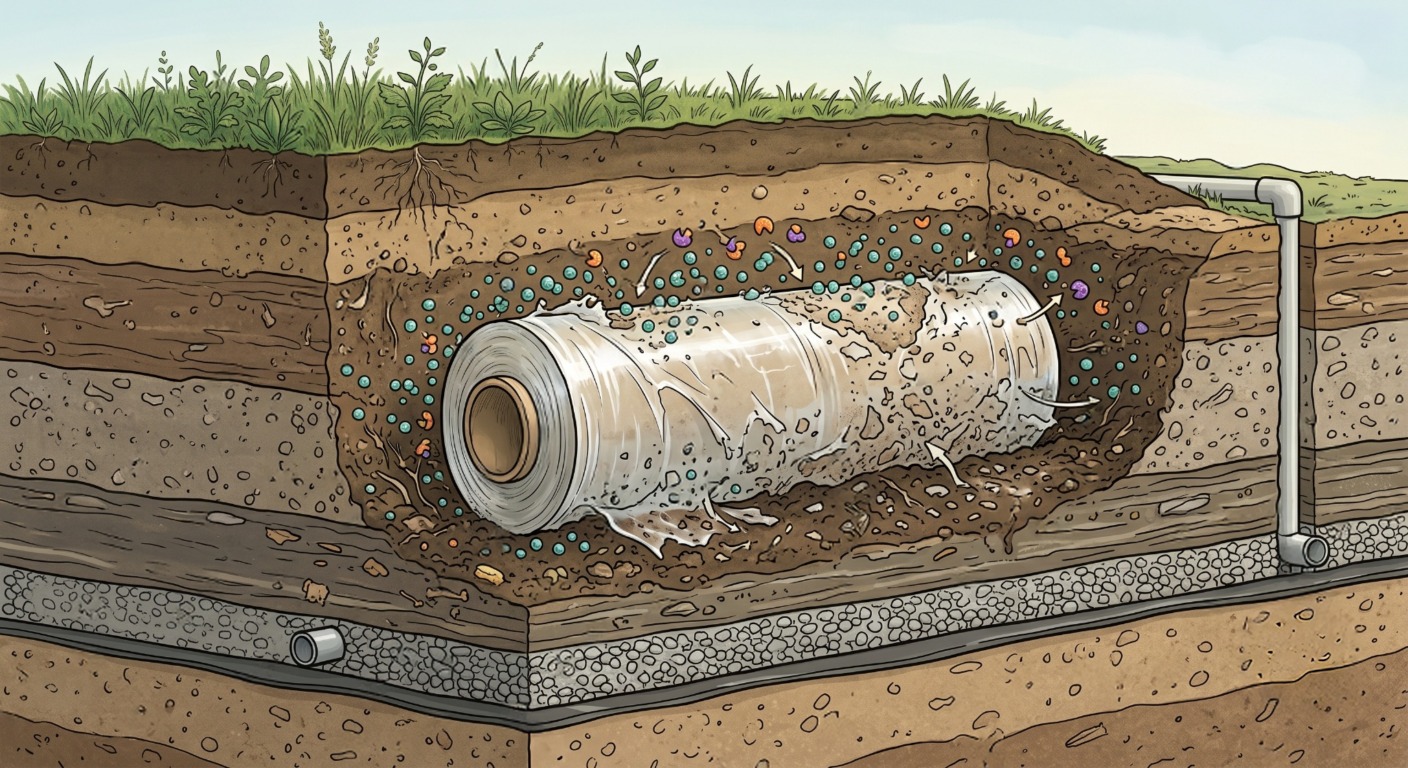
Landfill-biodegradable plastics can be considered as a way to complement the move to a circular economy. All the millions of tonnes of plastic that will be manufactured and eventually sent to landfills, while the circular economy is being developed, can be made to naturally biodegrade away. They will biodegrade over decades rather than persisting for many centuries. Making landfill-biodegradable plastic is accomplished by adding a small amount of inert organic supplement made of up highly biodegradable polyesters, to the parent plastic. Then once in a modern landfill, the microbes see the polyesters as a food source and colonise onto the plastic. As they digest the food, they release enzymes that attack the plastic under them to break off non plastic intermediates which the microbes can consume as more food and then release more enzymes.
Figure 1 shows an example of the effectiveness of this on a conventional packing tape with a landfill-biodegradable supplement in it.
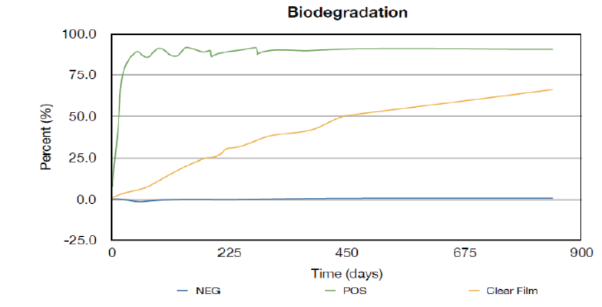
Figure 1. Biodegradation of Packing tape film over 844 days. The orange line is the film percent biodegraded. It shows 73% after 844 days. The flat bottom line is plastic with no landfill-biodegradable supplement in it showing no biodegradation. The top green line is for a known biodegradable material cellulose to show the test experiment is proceeding healthily.
The landfill-biodegradable technology can be applied to most forms of plastics. PE, PP, PVC and more with the same results. A high accelerated rate of biodegradation compared to a conventional plastic.
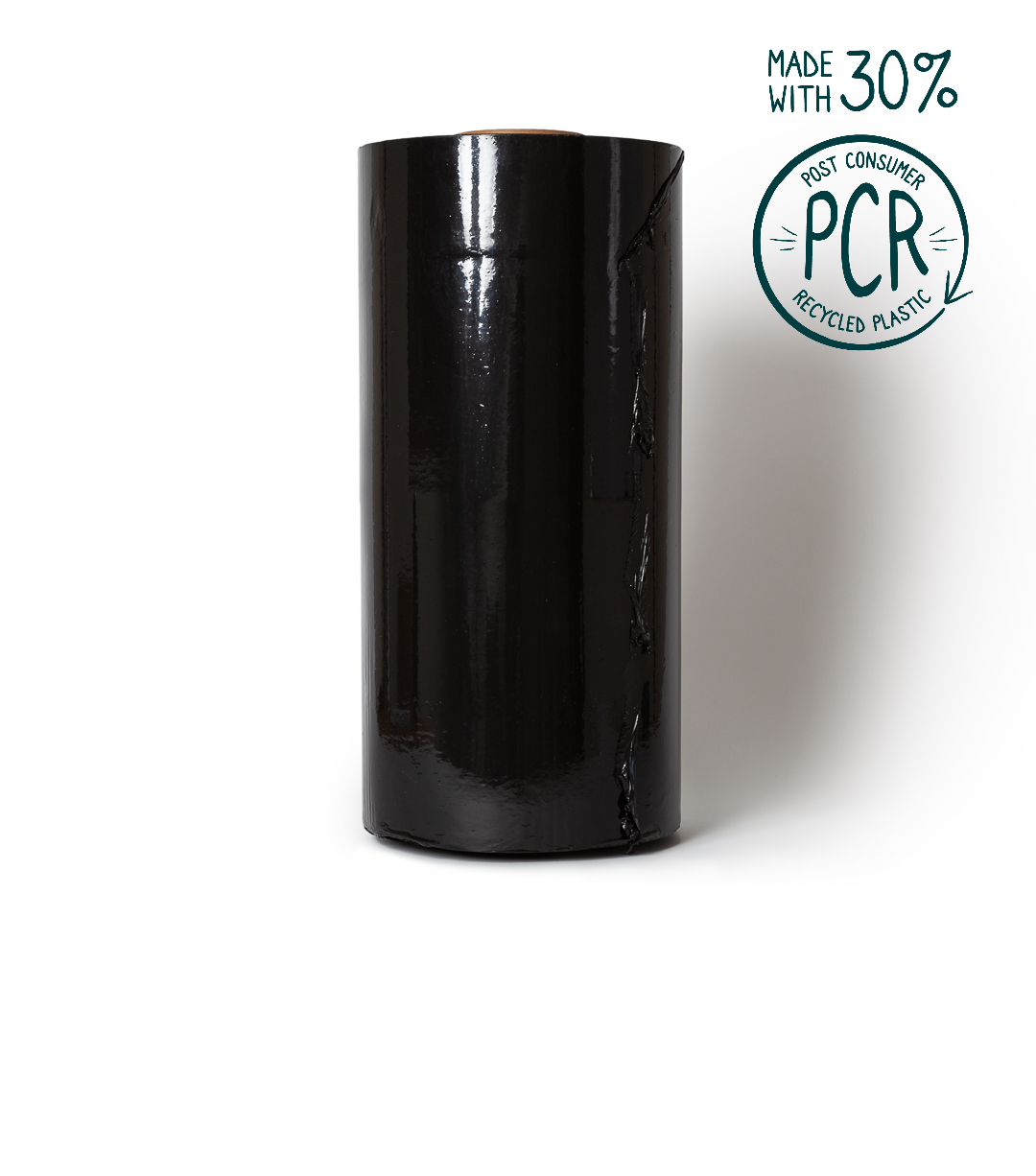
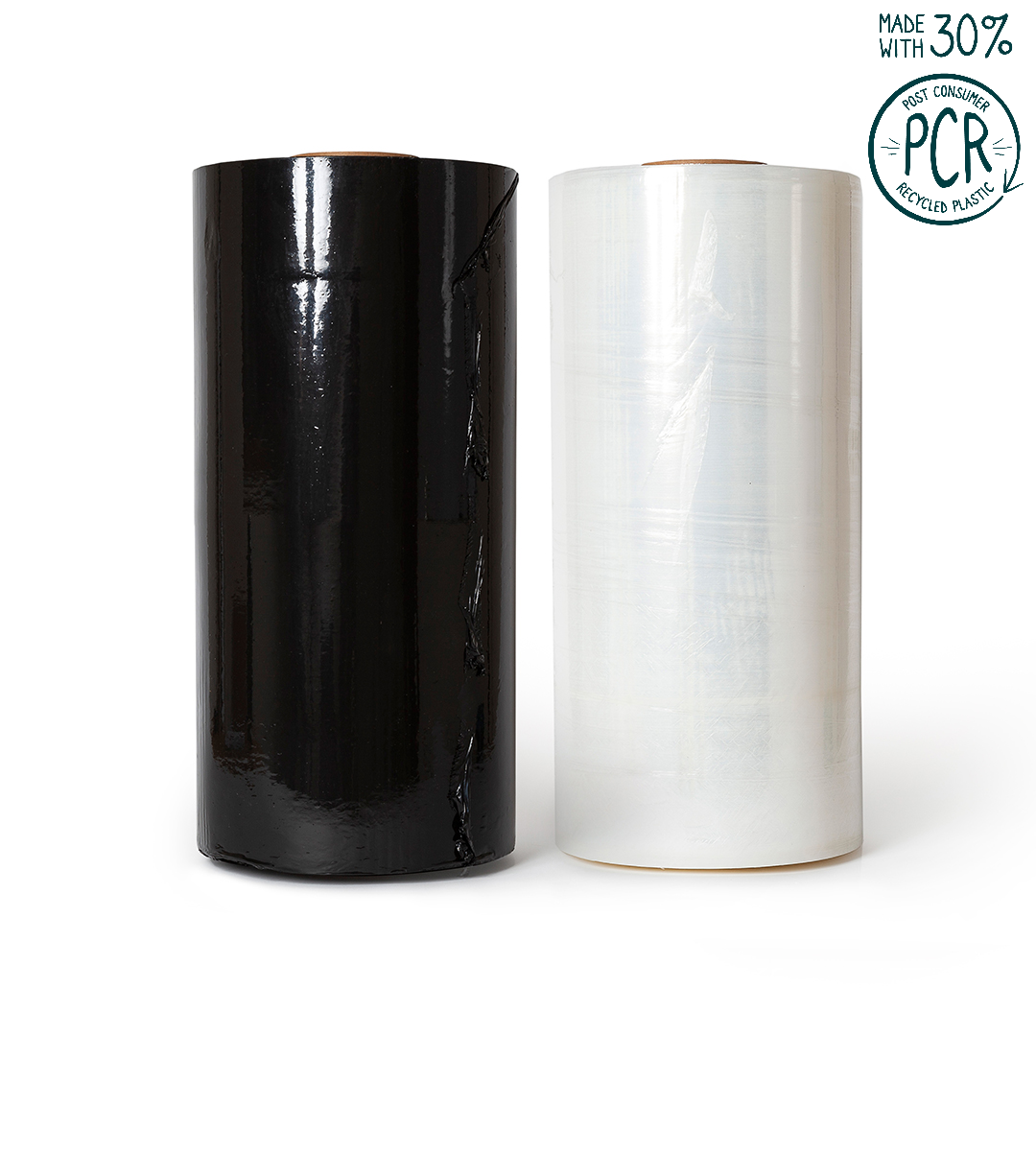
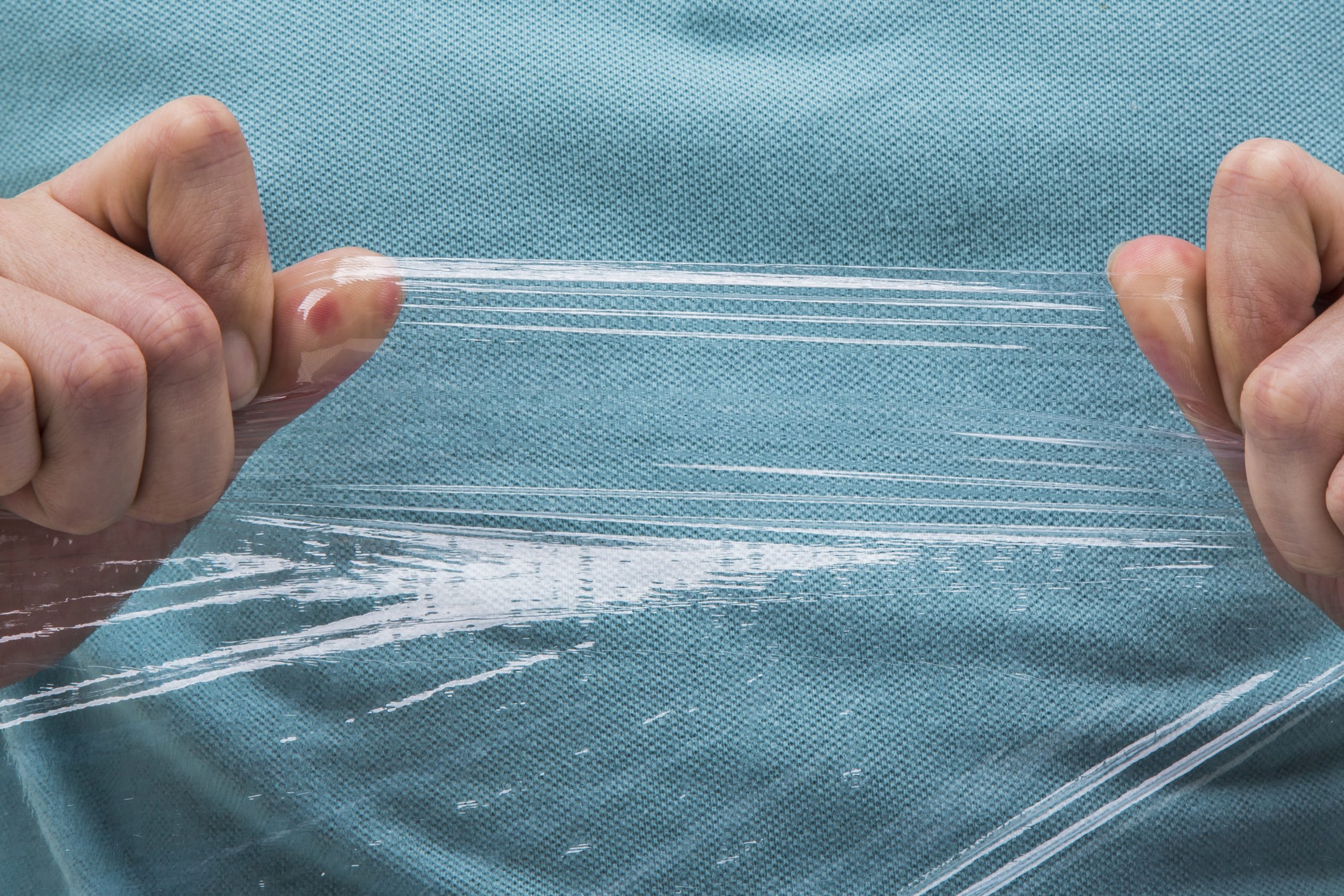
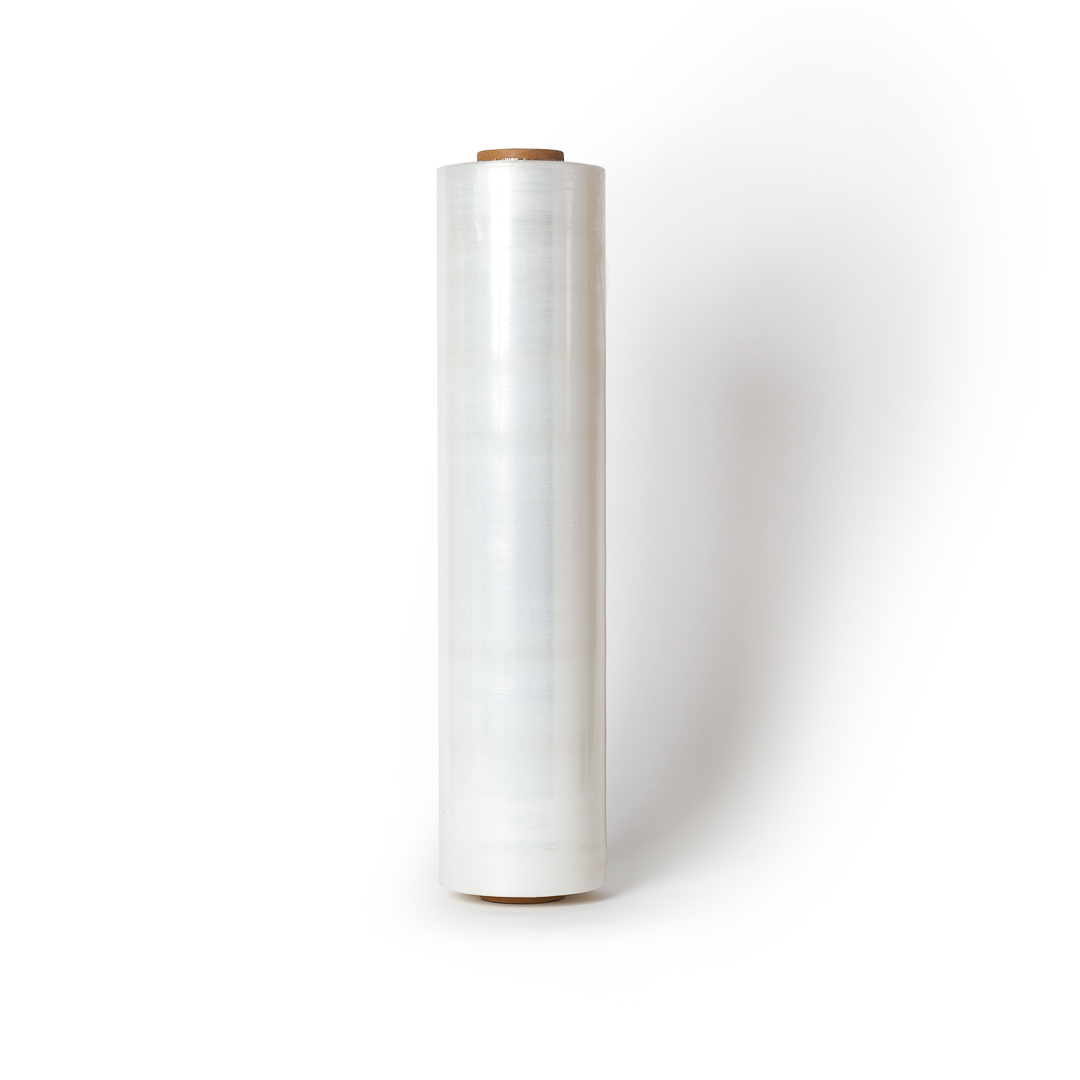

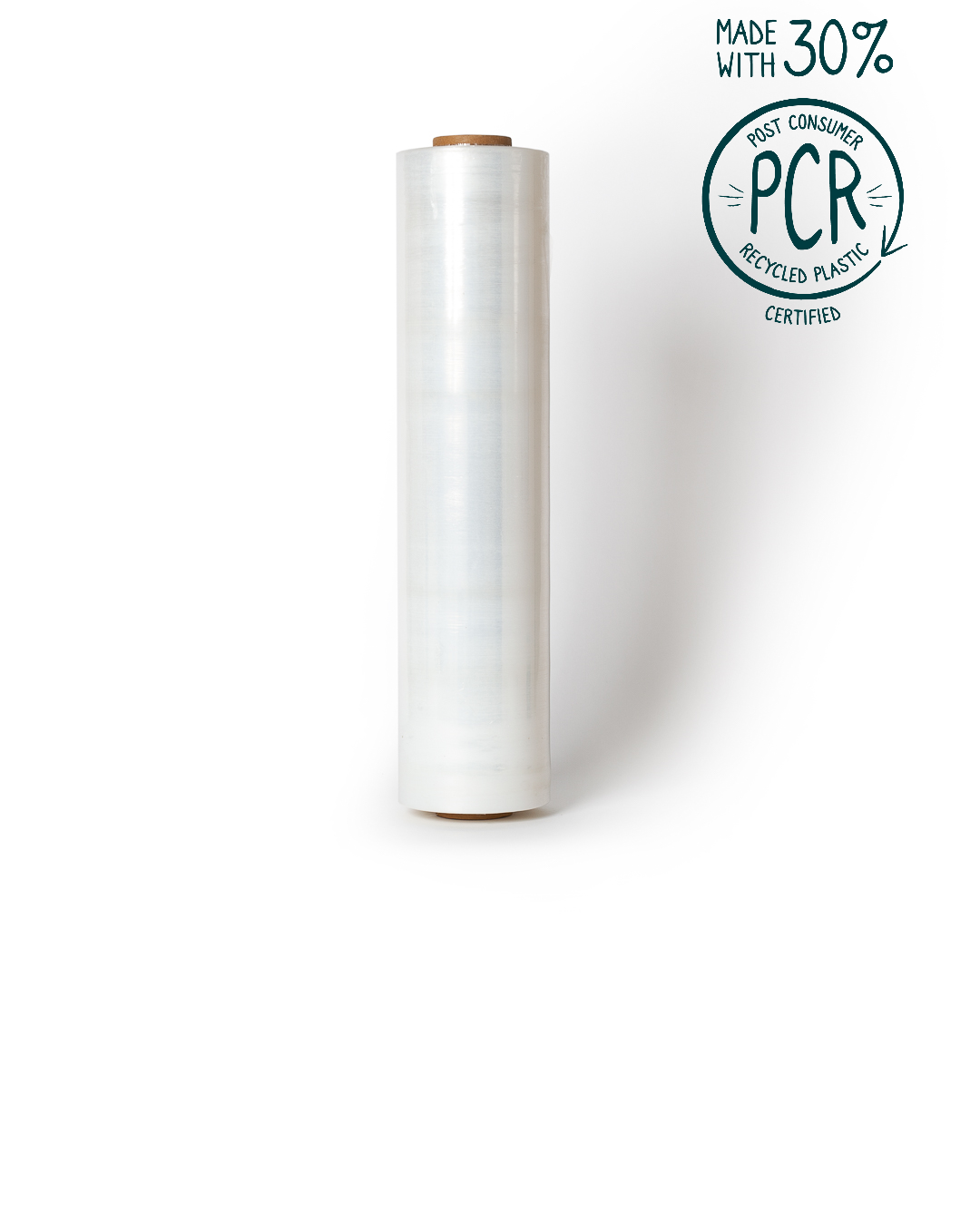
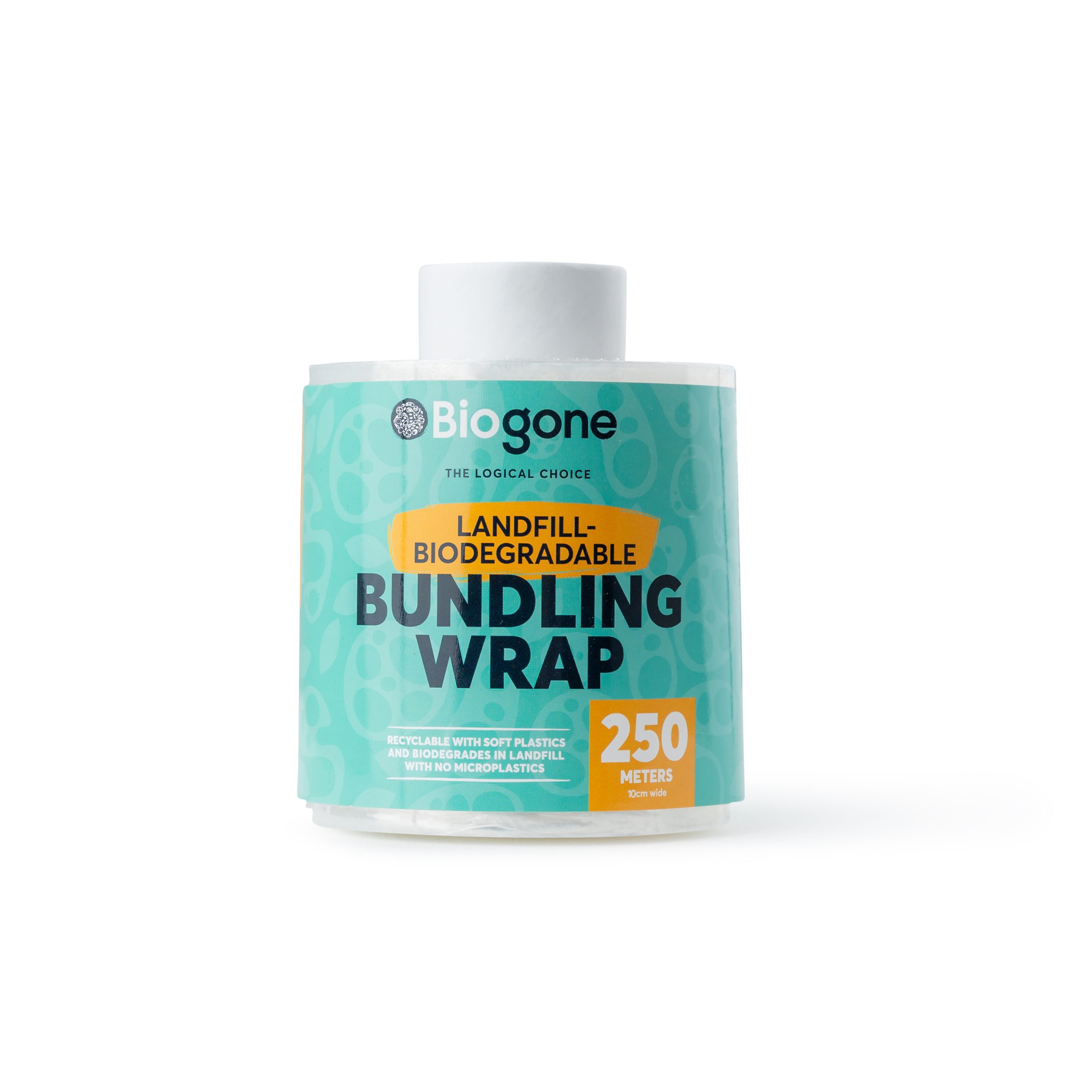
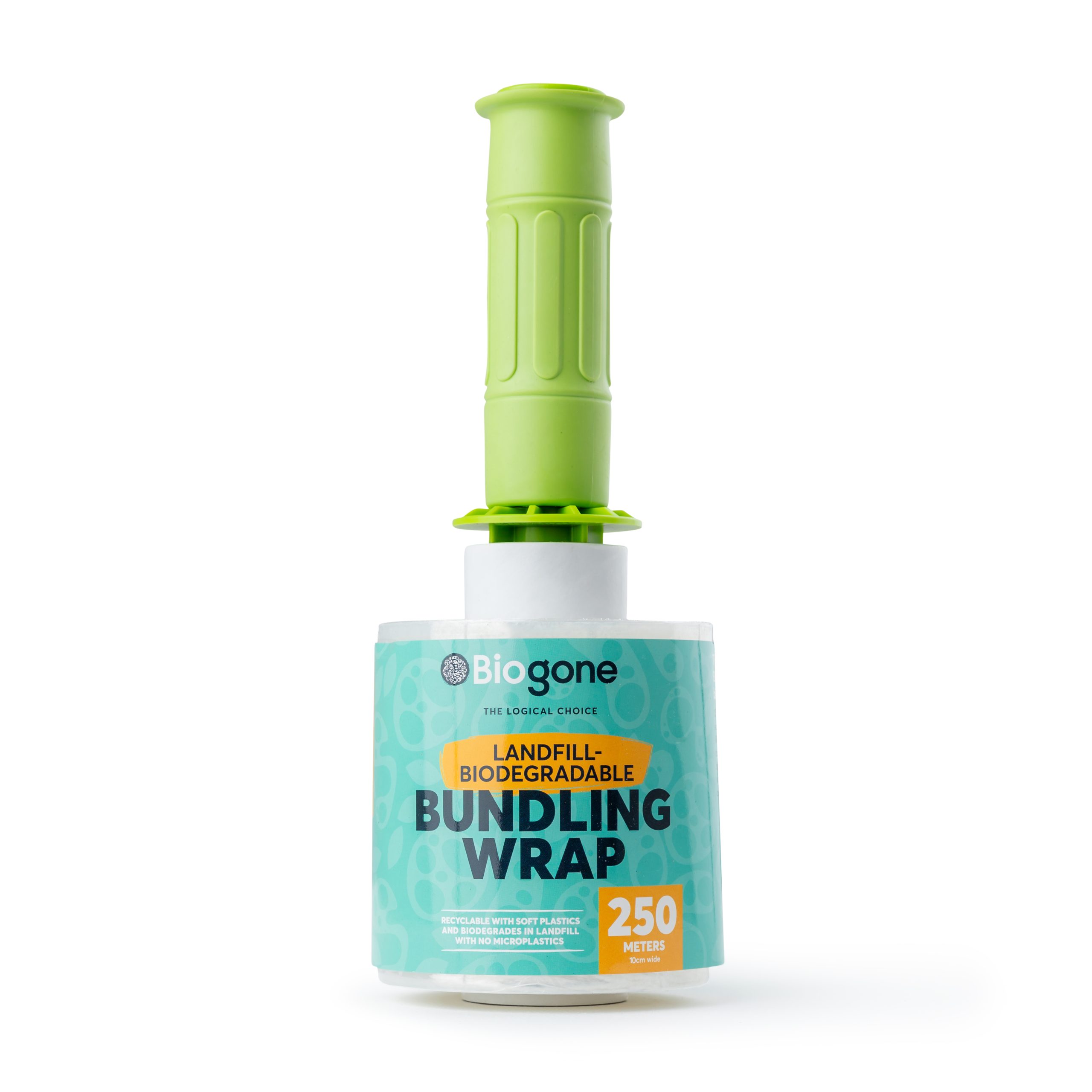
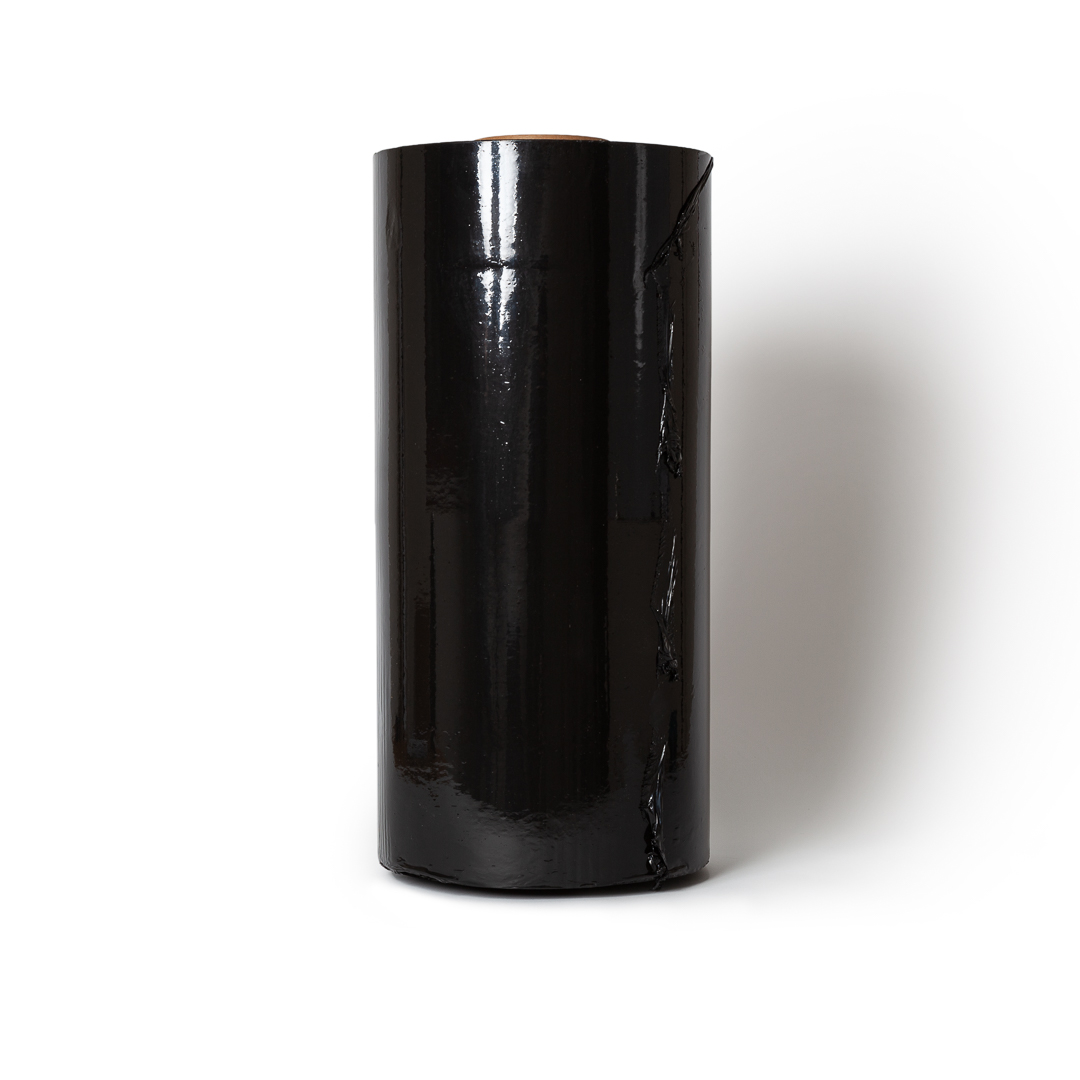
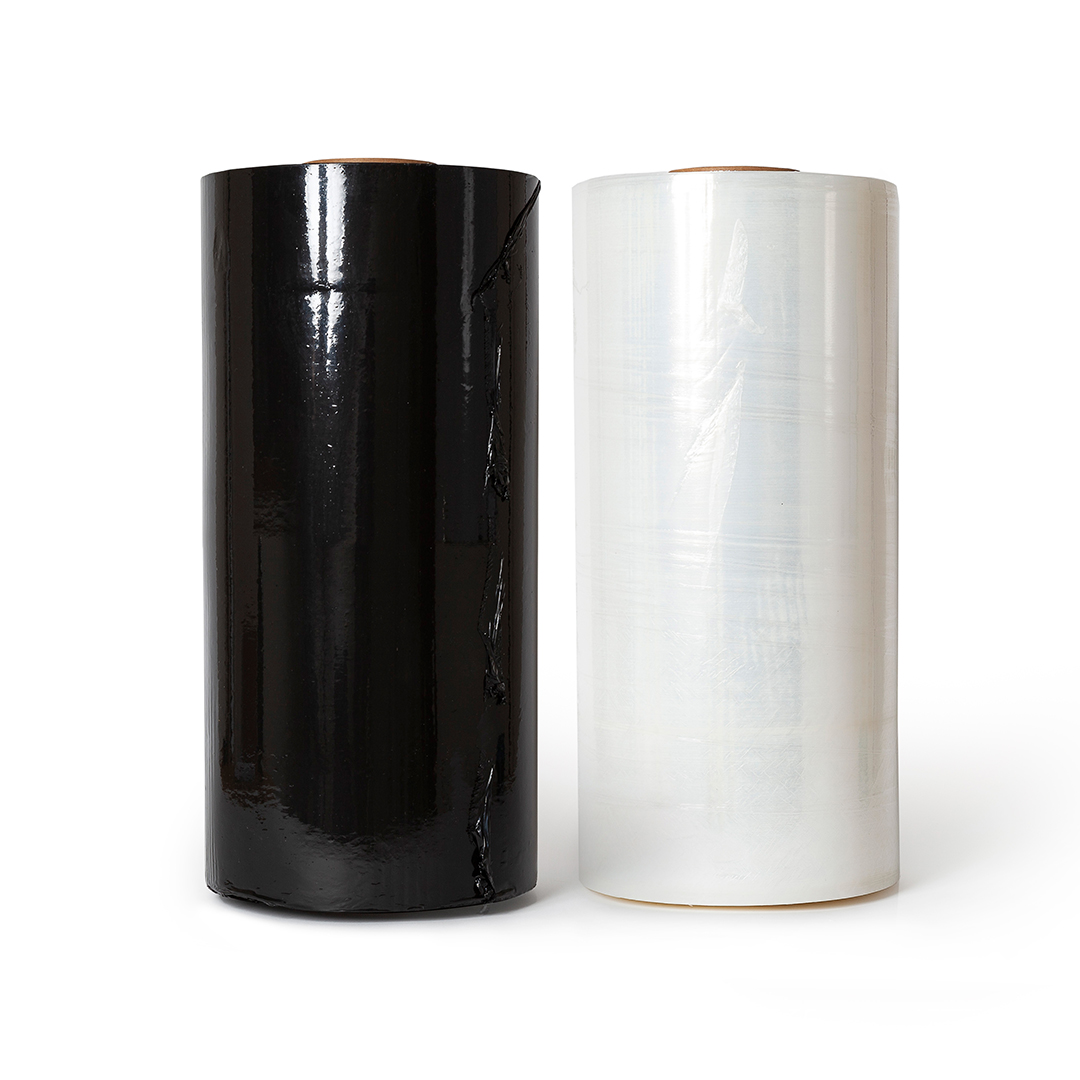
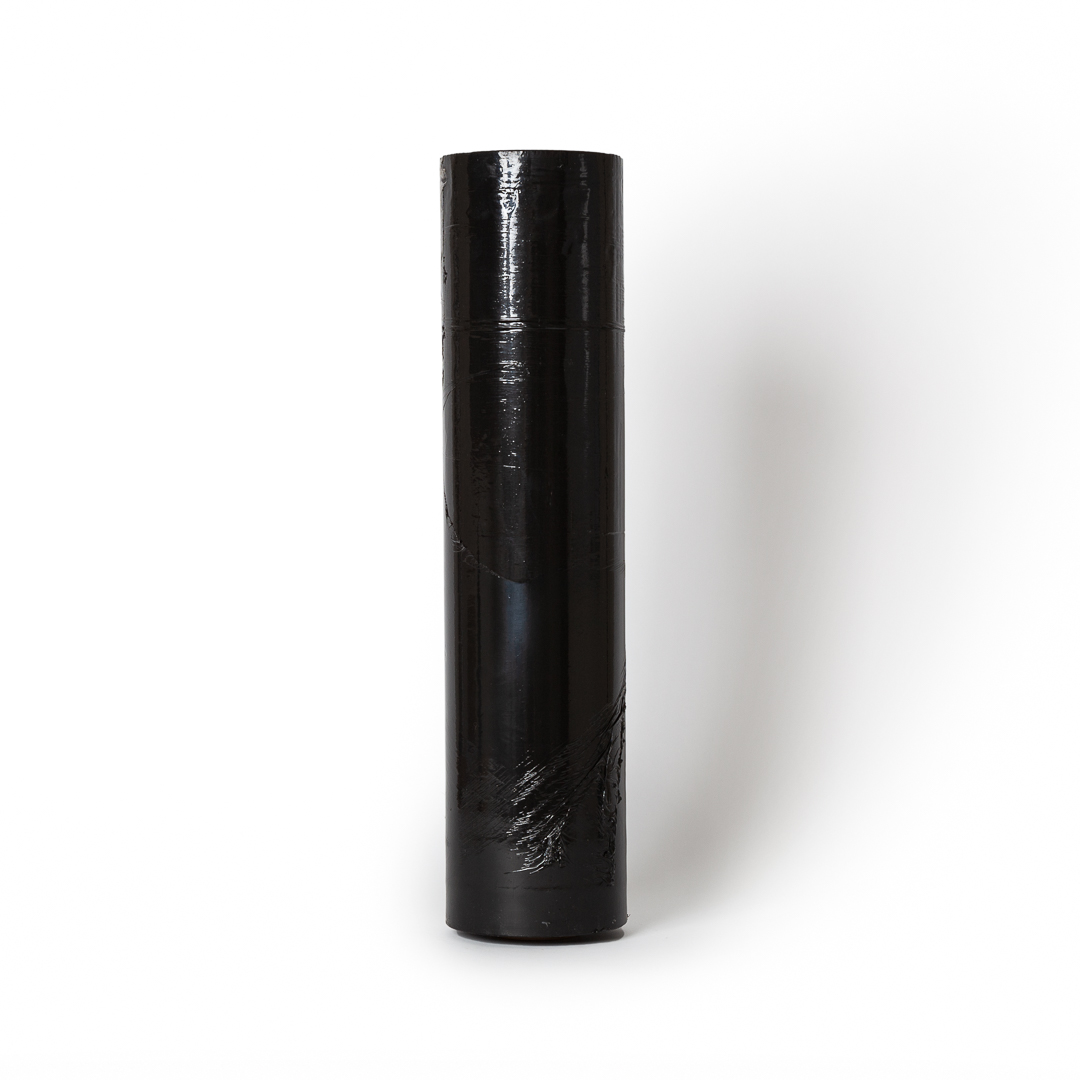
Figure 2. Photo of pallet stretch wrap in various colours made using the landfill-biodegradable technology. They look and preform just like conventional products.
Recyclability
Where the landfill-biodegradable technology complements the circular economy is in recycling. A plastic product made landfill biodegradable is just as fully mainstream recyclable as the conventional plastic would be. The supplement is an organic food source that sits alongside the polymer chain. It does not interact with the chain, so the plastic polymer retains all its original properties and hence its recyclability. Hence, consider the development process of the circular economy, starting off from essentially zero now and almost all plastic waste is being disposed of. Then as time goes on, more plastic is recovered and recycled and less goes to landfill. All the while, the plastic that is being sent to landfill, will be able to biodegrade away and that plastic that is able to be sent for recycling can still recycled with no compromise from the supplement. The same applies to plastic that is repurposed into the more basic products. The inert supplement will remain there with no interaction with the polymer chains and the new products will look and perform just like they would made from conventional plastic waste. Even with all this, it is inevitable that there will be residual plastic waste that will never make it to any recycle process for a number of reasons. This will always be disposed of and having it premade landfill-biodegradable will allow it too to biodegrade away if disposed to a modern landfill.
This is a substantial win for the environment with respect to plastic waste.
Other benefits to the landfill-biodegradable technology.
- No shelf-life issue. The inert supplement has no impact of the plastic material until the plastic is disposed to a modern landfill. Only once there will the effect of the landfill-biodegradable technology come into play.
- The supplement has US FDA approval for food contact, allowing landfill-biodegradable food packaging to be produced.
- No actively formed microplastics. Microplastics come from the breakup of a plastic into tiny fragments. There are additives that container chemicals called prodegradants that contain metal salts. When added to a plastic they interfere with the polymer chain and set off a slow chemical reaction that cause the polymer chain to break up over 12-18 months in to 1000s of tiny microplastic pieces. Plastics that do this care called Degradable plastics and are being banned in many places. With the landfill-biodegradable technology, the inert supplement has no impact of the polymer chain and hence no microplastics are caused by its presence.
- 76% of Australian household waste goes to landfill providing waste to energy recovery. Allowing plastics to biodegrade allows them to contribute to this and displace energy that would otherwise be potentially derived from coal sources.
- To make a product landfill-biodegradable does not require any change of production machinery. The addition of the polyester supplement is the only change for a small price increment.
Limitations on landfill-biodegradable Plastics.
No one product will solve the plastic waste pollution problem. Landfill-biodegradable plastics look and perform just like conventional plastic items and if disposed to a modern landfill offer accelerated biodegradation. However, they will all photo degrade in sunlight just like a normal plastic as the UV radiation directly attacks the polymer chain in the plastic. Should a plastic, made landfill-biodegradable, get into the oceans, there are no microbes there to digest the plastic away.
Why compostable materials will not be part of the Circular Economy.
Unlike landfill-biodegradable plastics, compostable plastics are;
- Not recyclable so have to be disposed after use, thereby promoting the linear economy.
- Home compostable product have12-14 month shelf life before they start to fall apart, which is leading to dumping of expired products before they can be sold
- Commercial compostable products have to go to a special compost facility in order to biodegrade. If sent to a landfill, that environment is too cold and lacks oxygen for the material to biodegrade.
- Should a compostable product be sent to a place where it can biodegrade, it is converted to CO2 directly thus any chance of capturing it embodied energy for power generation is lost.
- Even though a compostable product may partially be made of plant material, it still biodegrades to CO2, so it is having no benefit to reducing carbon concentration in the atmosphere.
In Closing
Plastic waste is going to be going to landfills for many years to come. Landfill-biodegradable technology can help this undesirable outcome without affecting any recycling processes as they develop and mature.