LANDFILL BIODEGRADABLE AND HOME COMPOSTABLE EVERYDAY PLASTIC PRODUCTS

9 07, 2026

Misleading Circularity Claims Being Made

2026-07-09T17:25:49+10:00By |General Blogs, News|

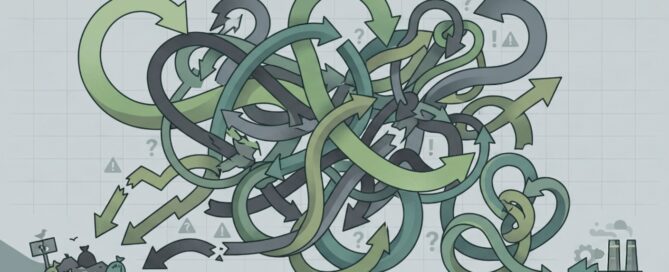
A conceptual editorial illustration showing multiple recycling arrows and circular economy loops tangled and overlapping in confusing directions, some loops broken and leading to a landfill icon, others looping back to a factory — clean flat-design vector style, muted green and grey palette, subtle warning/question mark motif, no text, no logos.
9 07, 2026

How Landfill-Biodegradable Plastics Complement the Circular Economy Transition.

2026-07-10T11:04:54+10:00By |General Blogs, News|

Australia's circular economy targets are slipping further out of reach — we're currently recycling only around 15% of the 3.5 million tonnes of plastic waste we generate each year. Dr Ross Headifen explains how landfill-biodegradable plastics offer a practical bridge: fully recyclable when recovery infrastructure exists, but able to naturally biodegrade in landfill when it doesn't — without the microplastic risks of degradable additives or the shelf-life and disposal limits of compostables.

12 11, 2025

Why Can’t We Recycle All Plastics?

2026-07-10T13:00:14+10:00By |News, Plastic News|

Everyone knows the recycling triangle with numbers 1 to 7 - but that symbol is an identification code, not a recycling guarantee. Not all plastics are created equal, and not all are recyclable in practice, with infrastructure gaps, contamination, and market demand all limiting what actually gets processed. Dr Ross Headifen breaks down which resin types make the cut, why soft plastics remain a challenge, and how a responsible end-of-life backup closes the gap recycling can't.

17 10, 2025

Who Invented Plastics – was that the beginning of the end?

2026-07-09T14:12:42+10:00By |News, Plastic News|

It started with a miracle material: British chemist Alexander Parkes unveiled Parkesine, the world's first man-made plastic, in 1856, followed by Bakelite in 1907 - durable, cheap, and endlessly useful. Dr Ross Headifen traces how that early promise turned into today's waste crisis, and argues the real failure wasn't inventing plastic, but never planning for what happens after we're done with it.

1 09, 2025

Food Service Plastics With a Better End of Life

2026-07-09T14:23:57+10:00By |News, Plastic News|

Gloves, cling film, bin liners, aprons, resealable bags - these items are essential for safety and efficiency in commercial kitchens and catering, but they are also some of the most common plastics ending up in landfill. Dr Ross Headifen looks at how Biogone's landfill-biodegradable range delivers the same performance food businesses need, with a responsible fallback when recycling isn't available - breaking down roughly 90% faster with no microplastics formed.

12 07, 2025

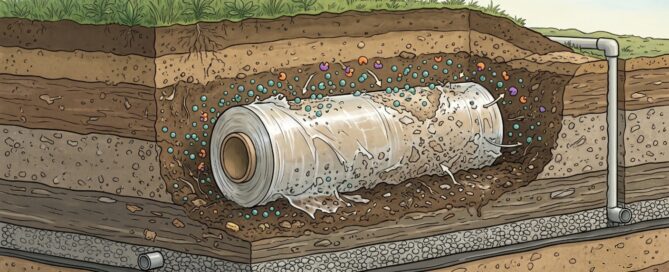
What Happens to Plastic Waste If It’s Not Recycled?

2026-07-09T14:16:48+10:00By |News, Plastic News|

When plastic misses the recycling bin, it doesn't disappear - it lingers for centuries. More than 80% of plastic waste in Australia goes straight to landfill each year, taking hundreds of years to break down while releasing greenhouse gases as it slowly degrades. Dr Ross Headifen explains why relying on recycling alone isn't realistic yet, and how a dual-pathway approach - recyclable where possible, landfill-biodegradable if not - closes the gap.

6 06, 2025

From 2019 to 2025: Plastic Waste in Australia — A Five-Year Journey

2026-07-09T14:17:45+10:00By |News, Plastic News|

Five years after Australia set ambitious 2025 packaging targets, the results are mixed: stronger bans and greater public awareness, but only about 14-15% of plastic waste is being kept out of landfill, a number that has barely budged despite infrastructure investments. Dr Ross Headifen takes stock of what's changed, what hasn't, and why businesses can no longer treat plastic's end-of-life as optional.

30 05, 2025

Will plastic ever be banned?

2026-07-09T14:18:35+10:00By |News, Plastic News|

A sweeping, global ban on plastic isn't coming any time soon - but targeted bans are: several single-use plastic items are already illegal to sell or supply in Victoria, including straws, cutlery, plates, and all expanded polystyrene foodware, with the ban also covering biodegradable, degradable, and compostable versions of those items. Dr Ross Headifen breaks down where global treaty talks stand, what's already banned state by state, and the practical steps businesses should take now rather than waiting for the rules to catch up.

Go to Top